
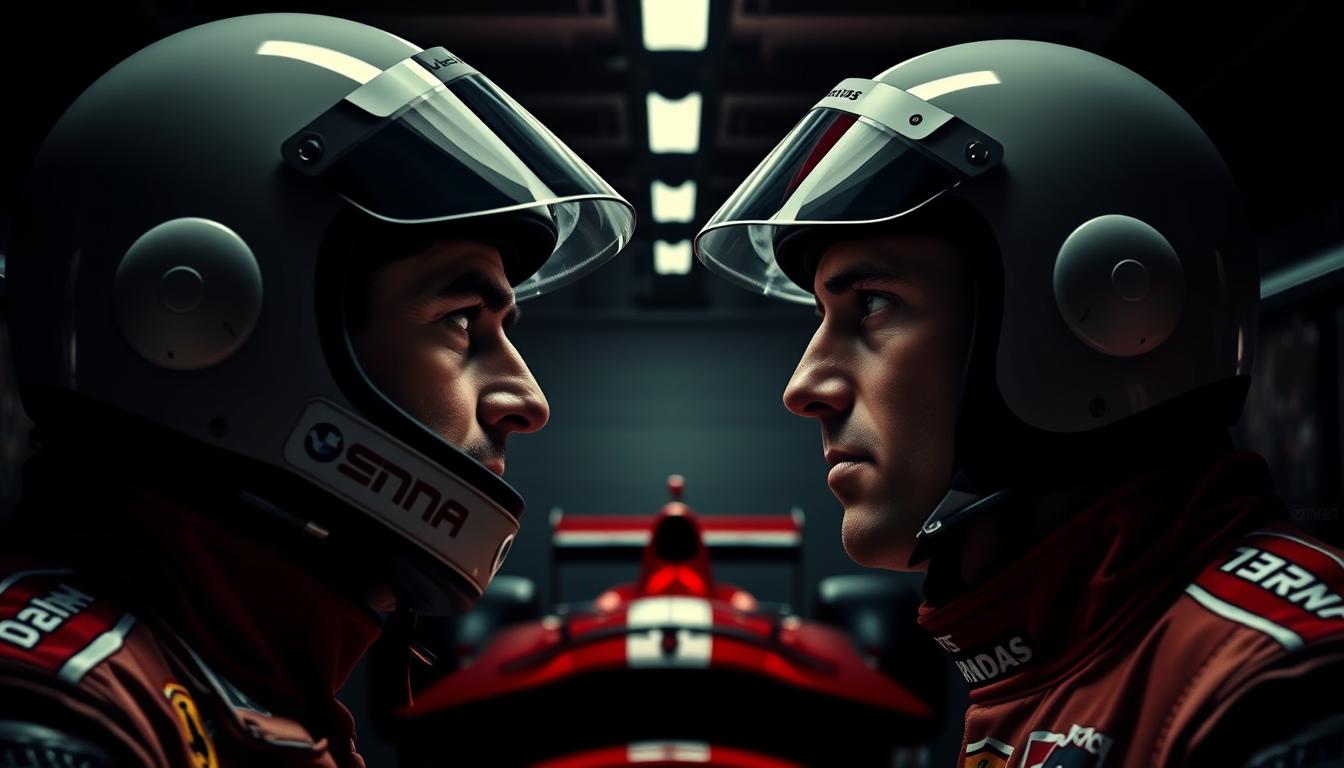
For decades, fans and historians have argued over one of Formula One‘s biggest questions: who deserves the crown as the sport’s greatest driver? Two names come up first in nearly every grand prix conversation.
The Brazilian icon Ayrton Senna and the German powerhouse Michael Schumacher raced in different eras but each left an unmistakable mark on the racing world. Their careers offer contrasting paths to success — from raw qualifying speed to systematic domination — that together define modern F1 history.
This article compares their career highlights — championship title counts, race wins, and pole positions — and looks beyond numbers at driving style, team impact, and cultural legacy. Expect statistics, context, and the stories that made each man into a global world figure.
Numbers tell part of the story; era, competition, and team support complete the picture. Read on to weigh the evidence and decide for yourself.
Key Takeaways
- Ayrton Senna and Michael Schumacher dominated different periods in F1 and represent two distinct ideas of greatness
- Comparisons must balance statistics (titles, wins, poles) with qualitative factors like driving style and era context
- Team dynamics and car reliability heavily influenced each driver’s record
- Wet-weather skill, qualifying brilliance, and technical feedback are essential measures of legacy
- Both drivers left lasting cultural and safety impacts that extend beyond the racetrack
Introduction: The Ultimate F1 Rivalry Debate
Across generations of fans, one comparison reliably ignites passionate debate: Ayrton Senna versus Michael Schumacher. That rivalry goes beyond headline statistics and championship tallies to ask what “greatness” really means in Formula One.
Both drivers captured the global imagination and helped define the sport for millions of people. Their careers demonstrate different routes to excellence—one built around raw qualifying speed and wet-weather heroics, the other around systematic development and season-long consistency.
Why the Senna-Schumacher Comparison Endures
Although their peak years fall into different periods, the debate remains vivid because each driver embodies a distinct ideal of greatness. Ayrton Senna won three World Championships during his career and held a record number of poles for many years; Michael Schumacher amassed seven titles and transformed team performance across seasons.
Technological shifts, safety changes, and varying car reliability across eras complicate direct number-by-number comparisons. The quality of rivals and the teams they raced for also shaped what each driver could achieve.
Defining Greatness in Formula 1 Racing
To compare drivers fairly, use a short framework of measurable and qualitative criteria:
- Statistics: championships, race wins, pole positions (contextualize by career length and team)
- Racecraft: consistency, overtaking, and performance under pressure
- Wet-weather & qualifying skill: single-lap speed and adaptability in changing conditions
- Team impact: technical feedback, car development, and leadership across a season
- Legacy: cultural influence, safety contributions, and lasting impact on the history of the sport
Using these criteria lets us evaluate both champions on fair, repeatable terms while preserving the stories that made their careers memorable.
The Art of Driving: Contrasting Styles and Philosophies
Examining these two legends highlights two very different routes to F1 greatness. The Brazilian maestro and the German technician reached the top through contrasting approaches that shaped how they raced, how teams built cars around them, and how fans remember them.
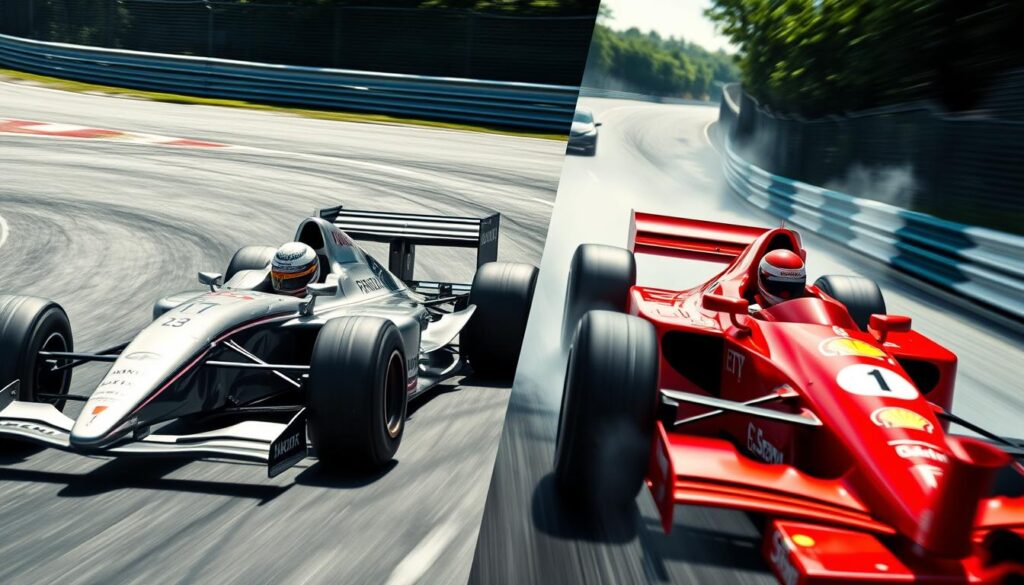
Senna’s Rain Mastery and Intense Focus
Ayrton Senna built a reputation as the sport’s premier wet-weather specialist. His drive at Monaco 1984 (second place in a Toleman in torrential conditions) and his dominant Portugal 1985 victory are frequently cited as proof of an extraordinary feel for grip and balance in the wet.
Senna often described an intense sensory focus during peak laps — a heightened awareness of track limits and grip changes that he translated into blistering single-lap speed. That combination of qualifying brilliance and wet-weather adaptability made him a regular “pole” contender and gave him a psychological edge over rivals.
Key attributes (Senna):
- Exceptional single-lap speed and qualifying performance
- Unmatched wet-weather car control and adaptability
- High-intensity focus that produced repeatable fast laps
Schumacher’s Scientific Precision and Technical Mastery
Michael Schumacher approached racing with systematic precision. He treated each session as data collection, working closely with engineers to translate subtle feedback into chassis, suspension, and aerodynamic gains. That methodical process helped him extract consistent performance across an entire season.
Schumacher’s strengths included race strategy, tire management, and the ability to develop a car across a year — qualities that turned competitive seasons into championship-winning campaigns.
Key attributes (Schumacher):
- Relentless technical feedback that improved car development
- Strategic racecraft and tire management over race distances
- Consistency across varied circuits and changing conditions
Both drivers adapted quickly when a circuit or weather changed, but their mental approaches differed: Senna relied on an instinctive, sensory feel for the limit, while Schumacher relied on data, setup changes, and team-driven iteration. Together, their contrasts define two equally valid — and complementary — blueprints for F1 success.
Ayrton Senna: The Brazilian Phenomenon
The story of Ayrton Senna starts in São Paulo, where a childhood obsession with speed grew into one of Formula One‘s most influential careers. Senna combined raw talent, relentless focus, and an ability to lift a team’s performance to build a global following.
Early Career and Rise to Prominence
Senna began karting as a teenager and quickly rose through the junior ranks. Early success in regional karting — including a notable South American karting title — led him to the UK, where he proved himself in British Formula Ford and then Formula Three.
By 1984 Senna made his Formula One debut with Toleman. His wet-weather drive at the 1984 Monaco Grand Prix (a storm-affected race in which he finished second) announced him to the world and showcased the car control that would define his reputation.
Signature Driving Characteristics
Senna combined extraordinary single-lap speed with a rare feel for grip in changing conditions. Rather than relying solely on data, he translated intense sensory focus into repeatable fast laps—especially in qualifying—earning a string of pole position results that set him apart.
He also provided detailed technical feedback to engineers, helping teams extract more performance from their cars despite limitations. His aggressive overtaking and uncompromising pursuit of perfection produced many memorable wins and defining moments.
| AspectDescriptionImpact | ||
| Wet Weather Performance | Exceptional car control in rain | Multiple iconic race wins |
| Qualifying Brilliance | Record pole positions | Strategic race advantages |
| Technical Feedback | Detailed car performance analysis | Improved team development |
| Mental Approach | Intense focus and precision | Unique driving philosophy |
| National Identity | Brazilian racing heritage | Global fanbase connection |
Senna’s Brazilian identity and charisma turned him into a national hero, and his relentless drive shaped a distinct racing career marked by unforgettable qualifying laps, dramatic grand prix performances, and a legacy that still moves millions of people.
Michael Schumacher: The German Machine
Where one driver became synonymous with raw speed and intense focus, another reshaped Formula One with methodical engineering and season-long consistency. Michael Schumacher combined technical insight, physical preparation, and strategic acumen to create a new template for championship success.
His disciplined approach changed how drivers work with their teams and how cars are developed across a season.
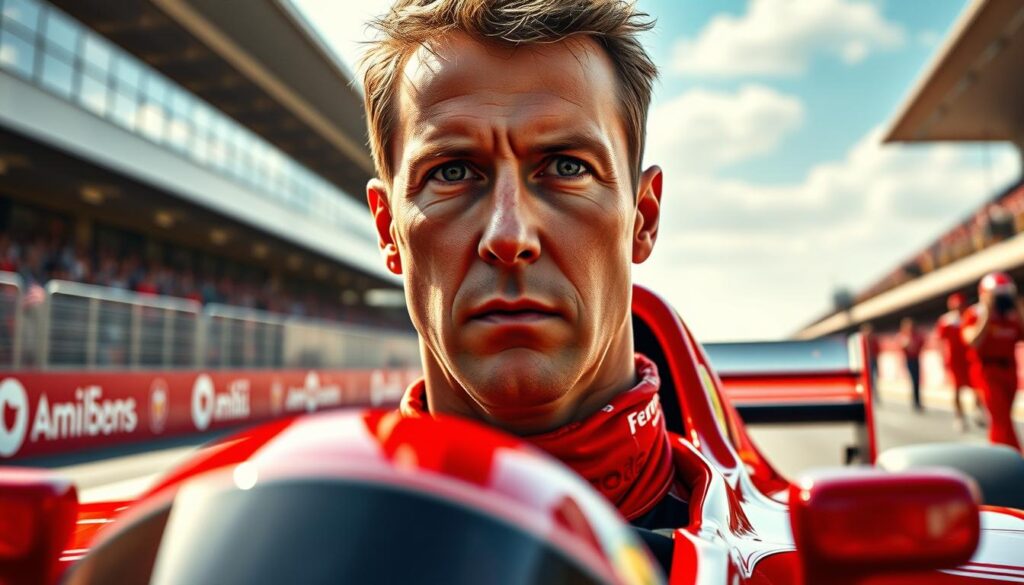
From Mercedes Junior to Ferrari Legend
Schumacher’s pathway began in sports cars and junior programs in the late 1980s before a standout single-lap in his 1991 debut at Jordan caught Benetton’s eye. He converted that opportunity into rapid progression: a first World title in 1994 and back-to-back success the following year.
His move to Ferrari in 1996 launched a rebuilding project that culminated in five consecutive championships from 2000 to 2004 — a period of sustained dominance built on technical development, strategic execution, and tight collaboration between driver and engineers.
The Complete Racing Package
Schumacher rewrote expectations for what a modern Formula One driver must deliver:
- Technical collaboration: detailed feedback that accelerated car and setup development throughout each season
- Physical conditioning: introduced rigorous fitness standards that improved race consistency and recovery
- Race strategy & tire management: superior decision-making over race distances that converted pace into wins
- Mental resilience: consistency across diverse circuits and weather conditions
His work ethic and attention to detail gave his team the environment and data to turn competitive cars into champions. Beyond the seven World Championships on his record, Schumacher’s influence persists in how modern drivers prepare, how engineers iterate during a season, and how teams structure development programs.
Head-to-Head: Championship Statistics
Numbers offer a clear starting point for this debate, but they need context. Career length, era differences, team performance, and mechanical reliability all influence headline statistics—so interpret them with care.
One driver raced in roughly ten full seasons at his peak while the other competed across nearly two decades, which naturally affects totals like wins and titles.
World Championships: 7-3 in Schumacher’s Favor
On raw championship count, Michael Schumacher leads with seven World championships to Ayrton Senna’s three. That gap reflects both Schumacher’s longevity and the periods in which his teams could deliver season-long contenders.
Championship totals are important, but they should be weighed against season context—team strength, regulatory changes, and reliability all shaped title opportunities.
Race Wins: 91-41 Statistical Dominance
In career wins, Schumacher’s 91 victories significantly outnumber Senna’s 41. More seasons and more reliable machinery in later years contributed to the numerical advantage, though win percentage and competitive field strength are useful normalizers.
Mechanical reliability improved meaningfully between their eras, increasing the chance to convert pace into actual race results.
Pole Positions: 65-68 Surprisingly Close
Qualifying tells a different story: Senna’s 65 poles (historic at the time of his death) compare closely with Schumacher’s 68, highlighting both drivers’ exceptional single-lap speed and car control.
Poles are a strong indicator of raw pace—Saturday performance that often translates into strategic advantage come race day.
| Statistic CategoryMichael SchumacherAyrton SennaSignificance | |||
| World Championships | 7 | 3 | Reflects career longevity and sustained team performance |
| Race Wins | 91 | 41 | Shows numerical dominance; influenced by seasons raced |
| Pole Positions | 68 | 65 | Indicates near-equal raw speed in qualifying |
| Career Seasons | 19 | 10 | Context for totals |
| Win Percentage | ≈29.6% | ≈25.5% | Efficiency per race entry |
Other metrics—podiums, fastest laps, and win percentage—add nuance. For example, win percentage narrows the gap by accounting for entries, while podium rate and fastest laps show consistency and race-day dominance.
Statistics alone cannot settle the “greatest” debate; they are one piece of a larger picture that includes grand prix narratives, era-specific challenges, and the quality of rivals faced.
Iconic Race Performances That Defined Careers
Certain grand prix performances transcend numbers and define careers. Two wet-weather masterpieces—each against the odds—help explain why fans remember Senna and Schumacher so vividly.
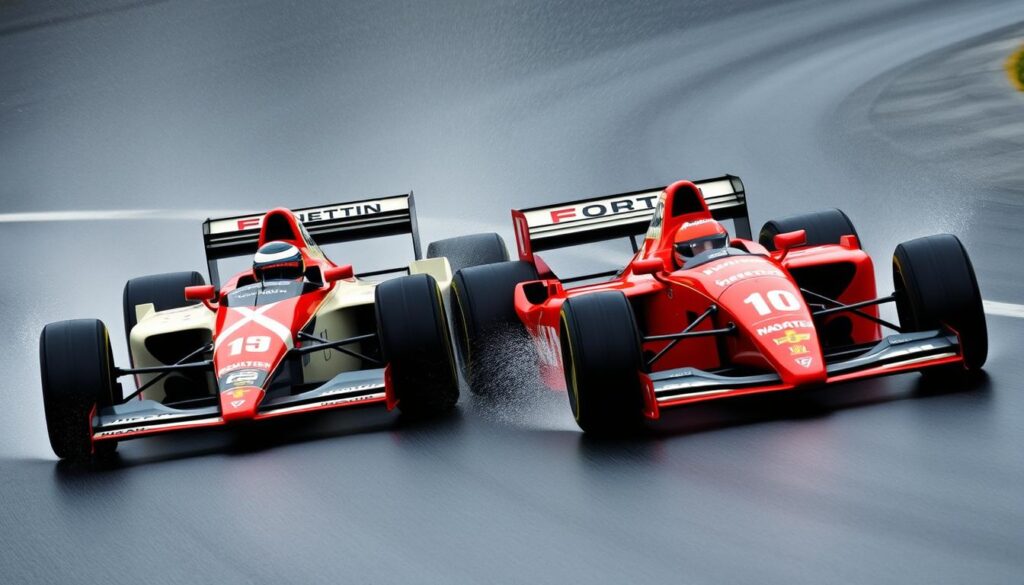
Monaco 1984: The Rain Master Emerges
The 1984 Monaco Grand Prix introduced Senna to the wider world. In a underpowered Toleman, he climbed to second in treacherous, rain-soaked conditions—an effort that announced his wet-weather talent and remarkable racecraft.
That performance established his “rain master” reputation and put top teams on alert for his potential.
Spain 1996: Dominance in Impossible Conditions
At the 1996 Spanish Grand Prix, Michael Schumacher produced one of his most celebrated drives. In heavy rain and driving a Ferrari that was not the season’s fastest in normal conditions, he controlled the race with commanding pace and won convincingly—demonstrating his ability to extract exceptional performance from difficult machinery.
Both races show how weather can level the playing field: when the car advantage narrows, driver skill often becomes decisive.
Comparing Legendary Wet-Weather Drives
These wet-weather masterpieces share a theme: each driver overcame a car disadvantage to create a defining grand prix moment. Rain often reduced the mechanical differentials between teams, allowing pure driving talent to shine.
- Car limitations forced reliance on driver skill and instinct
- Weather eliminated some team performance advantages
- Both performances elevated their reputations and influenced team interest
- Historic wet races contributed technical insights for future car development
Other standout performances—such as Senna at the 1993 European Grand Prix and Schumacher at the 1998 Hungarian Grand Prix—further illustrate how individual drivers turned difficult conditions into legendary results.
In short: statistics frame the debate, iconic races animate it. To judge greatness, combine both quantitative measures and the defining moments that reveal a driver’s character and capability.
The Great Rivalries: Prost vs Häkkinen
Great drivers are often defined by who they race against. Intense rivalries sharpen performance, create dramatic moments, and shape how fans remember entire seasons. Two rival pairings — Senna vs Alain Prost and Schumacher vs Mika Häkkinen — illustrate how competition elevates champions.
These rivalries spanned different eras and styles, but each pushed its protagonists to new levels of focus, strategy, and speed.
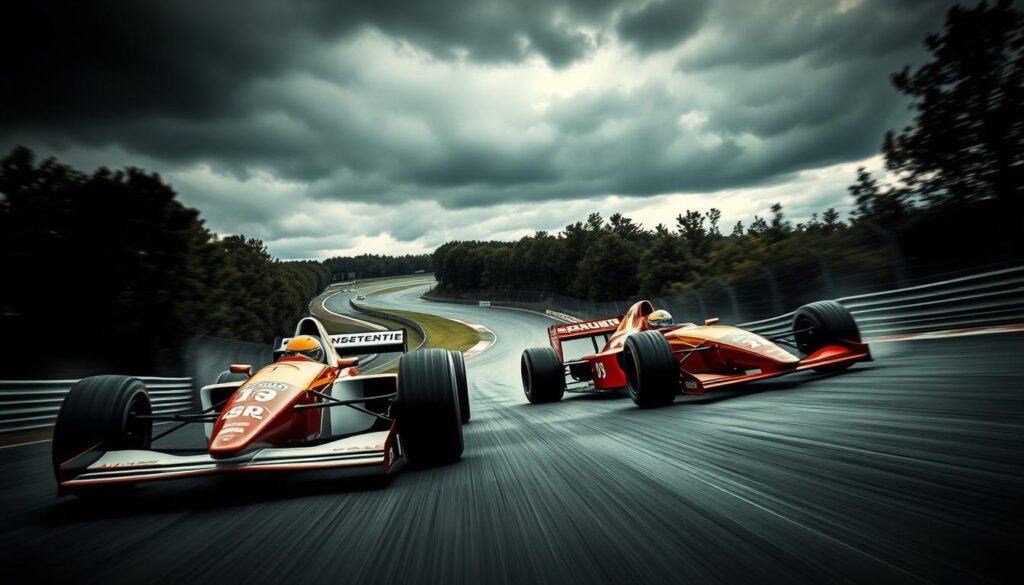
Senna–Prost: F1’s Most Intense Feud
The rivalry between Ayrton Senna and Alain Prost combined team politics, contrasting personalities, and high-stakes championship duels. Once teammates at McLaren, their relationship deteriorated into repeated on-track clashes and media sparring.
Most famously, the 1989 Japanese Grand Prix collision at Suzuka — a decisive moment for that year’s title — remains one of the sport’s most controversial incidents. Tensions flared again the following season, and their battles left a lasting mark on Formula One history.
Beyond controversy, the Senna–Prost rivalry produced tactical innovation, psychological gamesmanship, and examples of how team dynamics can shape championship outcomes.
Schumacher–Häkkinen: Technical Excellence vs Raw Speed
In the late 1990s, Michael Schumacher faced Mika Häkkinen in a professional, high-quality rivalry that often decided championships in the final races. Schumacher’s technical mastery and team-driven development met Häkkinen’s pure speed and racecraft in a series of tense title fights.
Unlike the personal animosity seen in some earlier feuds, the Schumacher–Häkkinen battles were marked by mutual respect but fierce on-track competition. Their duels pushed both drivers and teams to sharpen strategy, qualifying performance, and reliability.
Team politics, mid-season technical upgrades, and strategic gambits all played into the final outcomes, illustrating how rivalries can influence not just individual races but entire championship campaigns.
Era Context: Different Challenges and Competition
To compare drivers fairly, account for the different technical and competitive landscapes they faced. The 1980s and 1990s saw rapid technological change that affected how cars behaved and how drivers extracted performance.

1980s–1990s Technology and Reliability Factors
The 1980s introduced powerful turbo engines and electronic aids; active suspension and other innovations required frequent development and could be fragile. Mechanical failures were common, so driver skill sometimes mattered less than reliability.
By the 1990s, improved engineering and changing regulations shifted emphasis toward consistent performance, strategic development, and team coordination — contexts that influenced how many wins and championships were achievable.
Varying Levels of Competition Across Eras
Different eras featured different clusters of top teams and world champions. In the 1980s, multiple constructors and drivers (including Prost and Nelson Piquet) vied for titles; in later years, technical regulation changes and the rise of dominant teams shaped new competitive dynamics.
These fluctuations in field strength affect how we read statistics across time: a title in one year may have been won against a broader set of rivals than another.
Rule Changes and Their Impact on Performance
Regulatory shifts — from traction control to aerodynamic rules — altered car behavior and driver technique. Safety-driven circuit modifications changed racing lines and overtaking opportunities, while improved reliability changed how teams planned strategy and pushed for points.
“You cannot compare drivers from different eras without considering their machinery and competition. The context defines the achievement.”
Considering these contextual factors is essential: they explain why some statistical advantages exist and why raw numbers alone are insufficient to crown a single “greatest.”
Safety Legacy: How Tragedy Changed Formula 1
The 1994 San Marino Grand Prix weekend at Imola marked a turning point in modern F1 safety. Fatal incidents during that event exposed dangerous weaknesses in car design and circuit protection and precipitated rapid reforms.
Senna’s Impact After Imola 1994
The weekend began with the fatal qualifying crash of Roland Ratzenberger and ended with Ayrton Senna’s fatal accident at Tamburello. Senna — a three-time world champion — left a profound legacy: his death spurred the FIA to establish permanent safety commissions, accelerate circuit redesigns, and improve car crash protection standards.
Immediate changes included stronger cockpit structures, expanded runoff areas, and upgraded medical response procedures — reforms that have since saved lives.
Schumacher’s Role in Modern Safety Standards
Michael Schumacher also contributed to safety improvements during his career. He advocated for better cockpit protection and supported initiatives to strengthen medical response and barrier technology. His active collaboration with governing bodies and engineers helped advance driver safety measures.
Incidents such as Schumacher’s heavy 1999 crash at Silverstone demonstrated the improved protection systems in action and underscored the progress made since Imola.
| Safety AreaPre-1994 StandardPost-1994 ImprovementImpact | |||
| Car Chassis | Basic carbon-fiber structures | Enhanced side-impact and cockpit protection | Reduced force transfer to drivers |
| Circuit Design | Smaller runoff zones | Expanded runoffs and safer barriers | Lowered impact severity |
| Driver Equipment | Standard helmets and suits | Advanced protective gear and systems | Improved survivability |
| Medical Response | Limited on-track resources | Specialized mobile units and protocols | Faster emergency care |
| Barrier Technology | Concrete walls | Energy-absorbing barriers | Greater energy dissipation |
The safety evolution triggered by Imola and continued by later advocacy has made modern Formula One markedly safer. The sport continues to refine protection measures in honor of those lost and to protect future generations of drivers.
Team Dynamics and Car Development
Every championship-winning career rests on more than a single driver’s talent — it depends on a synchronized partnership between the cockpit and the garage. Both legends understood this: one forged emotional bonds that squeezed performance from strong cars, the other built systematic processes that improved machines year after year.
Their contrasting team philosophies produced the same result — championships — through different routes.
Senna’s Relationships with Lotus and McLaren
Ayrton Senna’s time at Lotus (mid-1980s) matured his technical understanding and racecraft, and his move to McLaren in 1988 paired him with one of the most dominant packages in Formula One. Senna’s detailed feedback helped engineers refine setups, and his ability to extract lap time elevated the cars he drove.
- Lotus years: formative period where Senna developed racecraft and technical input
- McLaren (1988): partnership with a highly competitive car produced an extraordinary run of wins and podiums
- Driver input: Senna combined feel-based feedback with relentless qualifying pace to maximize team results
Schumacher’s Ferrari Dynasty Building
Michael Schumacher arrived at Ferrari in 1996 and methodically rebuilt the team into a championship-winning organization. His hands-on collaboration with engineers and key hires created a “dream team” that converted steady development into five consecutive titles from 2000–2004.
- Systematic development: continuous car improvements across a season
- Team leadership: structured processes and technical clarity improved reliability and race strategy
- Long-term results: championship culture built over multiple seasons
“Great drivers make good cars exceptional through their technical feedback and team leadership.”
Both approaches proved effective: Senna’s instinct and urgency extracted maximum performance from competitive cars, while Schumacher’s methodical leadership created fundamentally stronger cars through ongoing development and teamwork.
Wet Weather Mastery: Comparing Rain Performance
Wet conditions expose the raw difference a driver can make. Both drivers turned heavy rain into opportunities — but in different ways.
Senna’s Intuitive Rain Mastery
Senna earned the “rain master” reputation by combining fearless commitment with a tactile feel for grip. In mixed and wet conditions he often found lines and traction where others could not, converting that advantage into qualifying poles and decisive race starts.
Schumacher’s Technical Adaptation
Schumacher approached rain through setup, tire strategy, and meticulous calculation. When conditions changed, he worked with his engineers to find optimal solutions and used race strategy to turn difficult situations into dominant race performances.
Contrasting Mental Approaches
Senna relied more on instinctive reactions and intense sensory focus; Schumacher relied more on data, iterative setup changes, and team-driven strategy. Both mental models produced exceptional wet-weather results.
Technical Adaptations Across Eras
Car technology and tire compounds changed how drivers tackled rain. Active suspension and other 1980s aids required different handling in wet conditions than the later cars Schumacher raced; tire evolution and electronic aids also altered wet-weather tactics.
Consistency Across Conditions
Across light drizzle and full downpours, both drivers remained remarkably consistent. Senna’s immediate adaptability and Schumacher’s predictable execution each translated into repeatable success.
| Performance MetricIntuitive ApproachTechnical Approach | ||
| Qualifying Performance | Instinctive lap extraction | Setup-driven single-lap optimization |
| Race Strategy | On-the-fly adaptation | Calculated risk and tire management |
| Car Setup Feedback | Feel-based adjustments | Data-driven recommendations |
| Overtaking Technique | Opportunistic, aggressive moves | Planned, strategic passes |
| Conditions Adaptation | Immediate response | Gradual, team-led adjustments |
Cultural Impact Beyond the Track
Greatness in Formula One reaches beyond trophies and podiums — the sport’s most memorable figures leave cultural legacies that touch millions of people worldwide. Both champions built influence that extended well past the racetrack.
Senna as Brazil’s National Hero and Philanthropist
Ayrton Senna became a symbol of national pride in Brazil. His international success inspired countless young drivers and offered a hopeful story for many during difficult economic times.
Off track, Senna was known for his charitable focus on children’s education. The foundation established in his name supports programs that continue to help underprivileged youth, and documentaries and films have kept his life and story alive for new generations.
Senna’s tragic death amplified his status as a national hero, and his legacy of generosity and national identity still resonates with people in Brazil and around the world.
Schumacher’s Global Brand and Popularity
Michael Schumacher became a global sporting icon through sustained success and a visible association with Ferrari. His red helmet and dominant years helped grow Formula One’s international audience.
Schumacher’s commercial reach — sponsorships, media appearances, and broad recognition — turned him into one of the most recognizable athletes of his time. While intensely private off the track, his status expanded the sport’s profile and drew new fans to grand prix weekends across continents.
| Cultural AspectSennaSchumacher | ||
| Public Recognition | National symbol and source of pride | Worldwide fame and commercial icon |
| Philanthropy | Education programs for youth (Senna Foundation) | Various charitable initiatives and public campaigns |
| Media Presence | Documentaries, national remembrance | Global advertising and widespread coverage |
| Lasting Legacy | Enduring national hero status | International sports icon remembered |
Both drivers left cultural footprints that shape how fans and non-fans alike remember Formula One: Senna as a beloved national figure and philanthropist, Schumacher as a global sporting brand who helped expand the sport’s reach.
The What-If Scenarios: Careers Cut Short
Counterfactuals are never definitive, but they help illustrate how timing and opportunity shaped each man’s record and public story.
Senna’s Potential with Williams in 1994
Senna had negotiated a move to Williams for 1994 that promised a competitive car and a chance to fight for further titles. Had that season occurred under different circumstances, he might have added to his win and title totals; instead, the potential remained an enduring what-if in motorsport history.
Schumacher’s Mercedes Comeback What-Ifs
Schumacher’s late-career return with Mercedes offered glimpses of his old form but came before that team’s period of unprecedented dominance. If timing had differed, additional seasons could have added to his tally of wins and titles; as it stands, the comeback remains a notable chapter and a source of speculation among fans.
These hypothetical scenarios remind us that careers are shaped by opportunity, team performance, and timing — factors as important as raw talent in the final tally of a driver’s achievements.
Conclusion: The Unanswerable Debate
There is no definitive answer to who is the single “greatest” driver: Michael Schumacher’s numerical supremacy in titles and wins reflects exceptional longevity and team performance, while Ayrton Senna’s raw speed, qualifying mastery, and wet-weather heroics represent a different—equally valid—measure of greatness.
Context is everything: era, car, competition, and opportunity shape records as much as talent. Both men changed how the sport approaches preparation, teamwork, and performance—and both remain central figures in Formula One history.
Which matters more to you—titles and records, or peak moments and raw speed? Join the conversation, leave your pick in the comments below.
The Legacy Continues
Explore More Icons:
- Ronaldinho: The Legend Who Redefined the Beautiful Game
- Beyond 1,000 Goals: The Cultural and Political Legacy of Pelé
Deep Dive & Multimedia:
- Ayrton Senna – Official F1 Profile – Estatísticas oficiais e resumo da carreira no site da Formula 1®. Ayrton Senna | Formula 1® Hall of Fame Profile
- Michael Schumacher – Official F1 Profile – Estatísticas detalhadas e resumo da carreira no site da Formula 1®. Michael Schumacher | Formula 1® Hall of Fame Profile