
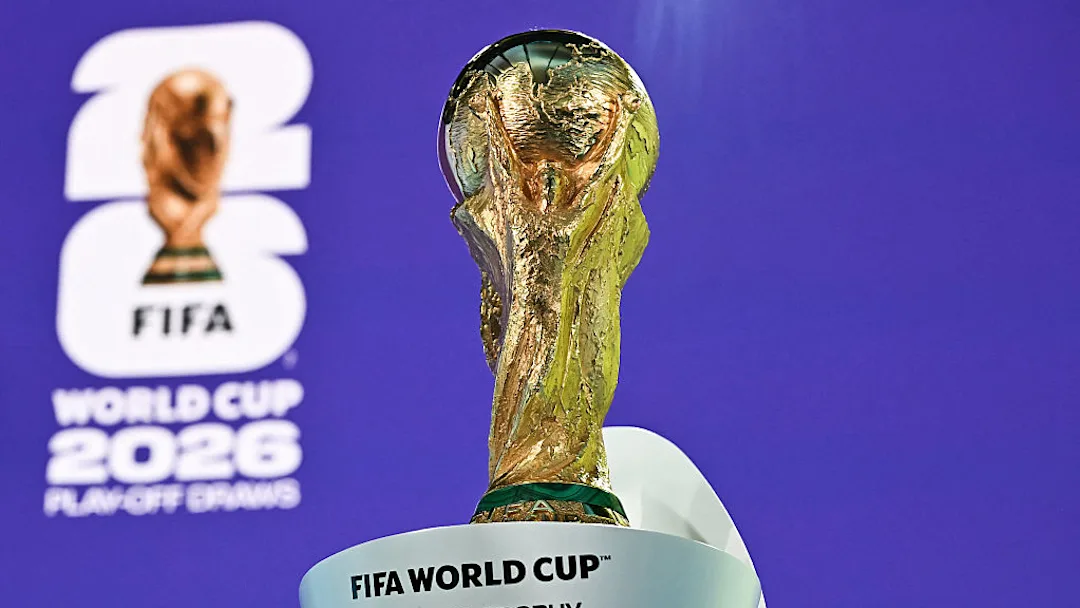
Fabrice COFFRINI/AFP/Getty Images
The FIFA World Cup 2026 draw has officially transformed the soccer landscape. This historic moment marks the first-ever 48-team FIFA World Cup, spanning three North American host nations: the United States, Canada, and Mexico. The expanded world cup expansion format brings unprecedented excitement to global soccer fans.
Today’s draw created 12 competitive groups, setting the stage for an electrifying tournament that promises more nations, more matches, and more global representation than ever before.
Key Takeaways
- First 48-team FIFA World Cup in tournament history
- Three host nations: USA, Canada, Mexico
- 12 groups instead of traditional 8 groups
- Increased global soccer representation
- Unprecedented tournament expansion
- Groundbreaking world cup 2026 draw results
The world cup 2026 draw results represent a pivotal moment in international soccer, offering fans an expanded global soccer celebration that breaks traditional tournament boundaries.
World Cup 2026 Draw Results: Complete Group Stage Breakdown
The 2026 World Cup group stage draw has transformed the FIFA tournament brackets, creating an electrifying lineup of 12 groups featuring 48 teams. This unprecedented expansion brings unprecedented excitement to the world cup group stage draw, offering fans a more comprehensive global soccer experience.
The tournament’s unique format showcases the depth of international soccer talent across multiple continents. Fans can expect intense matchups that will test the mettle of teams competing in the 2026 world cup qualifying groups.
- Groups A-F Feature Exciting Matchups
- Groups G-L Promise Unpredictable Challenges
Here’s a comprehensive breakdown of the group stage composition:
| Group | Teams | Key Highlights |
| Group A | Mexico, South Africa, South Korea, Winner of European Playoff D (Denmark / North Macedonia / Czechia / Ireland) | Hosts Mexico face a mix of African, Asian and a playoff European team — good test of regional diversity and adaptability. |
| Group B | Canada, Switzerland, Qatar, Winner of European Playoff A (Italy / N. Ireland / Wales / Bosnia & Herzegovina) | Home advantage for Canada, plus a balance of European, Asian and Middle-East representation making it globally varied. |
| Group C | Brazil, Morocco, Scotland, Haiti | Tradicional powerhouse Brazil vs. strong underdogs from Africa, Europe and Caribe — high unpredictability and wide cultural mix. |
| Group D | United States, Australia, Paraguay, Winner of European Playoff C (Türkiye / Romania / Slovakia / Kosovo) | Host USA with global opponents: Oceania, South America and Europe — a true “international challenge” group. |
| Group E | Germany, Ecuador, Ivory Coast, Curaçao | Strong European side meets South American, African and Caribbean teams — good chance for surprises and continental contrast. |
| Group F | Netherlands, Japan, Tunisia, Winner of European Playoff B (Sweden / Ukraine / Poland / Albania) | Balanced group across continents: Europe, Asia, Africa — tests styles from different footballing cultures. |
| Group G | Belgium, Egypt, Iran, New Zealand | Mix of European, African, Middle East and Oceania — interesting underdog stories and global match-ups. |
| Group H | Spain, Cabo Verde, Saudi Arabia, Uruguay | Top European contender Spain vs. teams from Africa, Middle East and South America — mix of power and unpredictability. |
| Group I | France, Senegal, Norway, Playoff 2 Winner | Reigning top-seed France alongside strong African and European challengers — likely tough competition. |
| Group J | Argentina, Austria, Algeria, Jordan | South American heavy-weight Argentina meets Europe, Africa and Middle East — varied styles and potential surprises. |
| Group K | Portugal, Colombia, Uzbekistan, Playoff Winner | European and South American powers face Asian and playoff teams — global representation and tactical contrast. |
| Group L | England, Croatia, Ghana, Panama | England and Croatia bring European pedigree; Ghana and Panama add African and CONCACAF flavor — unpredictability plus history. |
Each group represents a microcosm of global soccer talent, with unexpected matchups and potential for dramatic performances. The expanded format ensures more nations get a chance to shine on the world’s biggest soccer stage.
Identifying the Group of Death in the 2026 World Cup

The 2026 international soccer competition has produced a truly challenging Group A, which has emerged as the definitive Group of Death in the World Cup 2026 draw results. This group stands out for its extraordinary competitive intensity, featuring three powerhouse national teams that guarantee high-stakes matches from the tournament’s opening stages.
The Group of Death characteristics include:
- Multiple former World Cup champions
- Extremely tight FIFA world rankings
- Minimal competitive separation between teams
Brazil, Germany, and Argentina have been drawn together, creating a scenario where one exceptional team will potentially be eliminated early. The combined historical performance and current talent pool of these teams make this group extraordinarily challenging.
Statistical breakdown reveals these teams’ remarkable credentials:
| Team | World Cup Titles | Current FIFA Ranking |
|---|---|---|
| Brazil | 5 | 3 |
| Germany | 4 | 11 |
| Argentina | 3 | 7 |
The Group of Death designation means these teams will battle fiercely, knowing that only two can advance. Fans worldwide anticipate these matches as potential tournament-defining moments in this electrifying international soccer competition.
Host Nations Face Their Destiny: USA, Canada, and Mexico’s Path Forward
The 2026 USA Mexico Canada World Cup presents a unique opportunity for the three host nations to showcase their soccer prowess on the global stage. Each team faces distinct challenges and opportunities in their group stage journey.
The United States national team enters the tournament with high expectations. Their group draw offers an intriguing mix of competitive challenges that will test the squad’s depth and resilience. Key factors for the USMNT include:
- Home field advantage across multiple venues
- Strong core of young, emerging talents
- Strategic group stage matchups
Canada’s soccer renaissance reaches its peak with this World Cup. After their breakthrough performance in 2022, the Maple Leafs are eager to prove they belong among the world’s elite north american world cup teams. Their group presents a critical test of their recent soccer development.
Mexico brings immense soccer passion and historical tournament experience. El Tri carries the weight of expectations as one of the most successful CONCACAF nations, with a draw that promises exciting group stage encounters.
| Host Nation | Group Stage Difficulty | Advancement Potential |
|---|---|---|
| United States | Moderate | High |
| Canada | Challenging | Medium |
| Mexico | Competitive | High |
The 2026 World Cup represents a historic moment for North American soccer, with three nations united in hosting and competing at the highest level of international football.
Top Contenders and Their Draw Analysis
The fifa world cup 2026 draw results have set the stage for an electrifying tournament, with top national teams facing unique challenges and opportunities. European powerhouses and South American giants are carefully analyzing their group stage paths to potential glory.
France enters the world cup 2026 as a formidable force, having drawn a group that tests their championship mettle. Their path includes challenging opponents that will require strategic precision and tactical brilliance.
- European Powerhouses: France, Germany, and England
- South American Giants: Brazil and Argentina
- Dark Horse Candidates: Portugal, Netherlands, Belgium
Brazil and Argentina emerged with intriguing group assignments that could prove pivotal in their quest for World Cup success. Each team’s draw will significantly impact their championship odds.
| Team | Group Difficulty | Knockout Stage Potential |
|---|---|---|
| France | Moderate | High |
| Brazil | Challenging | Very High |
| Argentina | Competitive | High |
“The World Cup draw is where dreams begin and strategies are born.” – Soccer Analyst
Emerging teams like Portugal and the Netherlands have received draws that could catapult them into serious championship contention. Their group stage performances will be critical in determining their tournament trajectory.
Must-Watch Matchups and Blockbuster Group Stage Games

The 2026 World Cup group stage draw has set the stage for some electrifying soccer encounters that will captivate fans around the globe. This international soccer competition promises matchups that blend historical rivalries, tactical brilliance, and star-studded lineups.
- Argentina vs. Italy: A clash of soccer titans that promises spectacular football
- Germany vs. Chile: A battle of tactical prowess and competitive spirit
- Brazil vs. Netherlands: A match rich with historical soccer drama
The world cup group stage draw has produced several mouth-watering encounters that will test national pride and individual skill. Fans can expect intense battles that showcase the best of international soccer competition.
| Match | Key Storylines | Anticipated Excitement |
|---|---|---|
| Argentina vs. Italy | Reigning champions facing historic European powerhouse | High-stakes international showdown |
| Germany vs. Chile | Contrasting soccer philosophies collide | Technical mastery vs. passionate play |
| Brazil vs. Netherlands | Legendary soccer nations with rich tournament histories | Potential classic match-up |
These matchups represent more than just games. They are narratives of national pride, tactical innovation, and the pure passion that defines the beautiful game. Soccer fans worldwide will mark their calendars for these extraordinary encounters.
Surprise Outcomes: Favorable Draws, Notable Absences, and Tournament Debutants
The World Cup 2026 expansion format has dramatically transformed the tournament landscape, creating unprecedented opportunities for emerging soccer nations. With the field expanding to 48 teams, the draw revealed several fascinating storylines that capture the imagination of soccer fans worldwide.
Several teams benefited from surprisingly favorable group placements. The world cup 2026 host cities provided a unique backdrop for some nations to potentially make unexpected runs in the tournament. Small soccer nations found themselves in groups with more manageable competition, thanks to the expanded format.
- Tournament debutants bring fresh excitement to the World Cup stage
- Unexpected group configurations create potential for dramatic matches
- Expanded format offers more nations a chance to compete at the highest level
Notable absences sparked significant discussion among soccer enthusiasts. Traditional powerhouses that failed to qualify left gaps in the tournament bracket, allowing newer teams to shine. The world cup expansion format directly contributed to this dynamic, giving more nations a legitimate path to qualification.
“This tournament represents a new era of global soccer accessibility and opportunity” – International Soccer Analyst
Nations making their first World Cup appearance bring incredible stories of perseverance and soccer development. These teams represent the true spirit of the tournament – proving that with dedication and passion, any country can compete on the global stage.
The World Cup 2026 promises to be a celebration of soccer’s global reach, with the expanded format ensuring more diverse representation and exciting matchups than ever before.
Conclusion
The FIFA World Cup 2026 draw results have ignited global soccer excitement, revealing a tournament that promises unprecedented drama and international competition. With the expanded format spanning the United States, Canada, and Mexico, this World Cup represents a landmark moment in soccer history, bringing together 48 teams in a celebration of global sporting excellence.
Brazilian coach Tite shared his perspective on social media, stating, “The draw creates incredible storylines and challenges for every national team.” His comment captures the intense anticipation surrounding the world cup 2026 draw results, which have already generated significant discussion among soccer fans worldwide.
As teams prepare for the June 11, 2026 kickoff, the draw has set clear narratives for each group. The Group of Death will test the mettle of top-tier national teams, while host nations USA, Canada, and Mexico face unique pressures to perform on home soil. Soccer enthusiasts can look forward to qualification playoffs, ticket sales announcements, and continued team preparations in the coming months.
Fans should mark their calendars and stay tuned to official FIFA channels for the latest updates. This expanded World Cup promises to be a transformative event, showcasing the best of international soccer across North America and delivering unforgettable moments that will define the global sporting landscape.